The emergence of lettered painting under the Qing
The rise of the 清朝 dynasty in 1644 marked a turning point in Chinese artistic history. The orthodox school, or 正统画派 , became the dominant style among scholar-officials. This approach valued technical mastery inherited from ancient masters while advocating individual expression through brush and ink.
Between 1754 and 1799 emerged the significant phenomenon of the Eight Eccentrics of Yangzhou 扬州八怪 . These independent artists broke with conventions by openly commercializing their works - a practice deemed scandalous by traditionalists. Their expressionist and abstract style, characterized by energetic brushstrokes and bold compositions, already foreshadowed the Shanghai School that would dominate the following century.
Qianlong: emperor and patron of the arts
The reign of Emperor 乾隆 (1735-1796) constituted the cultural apogee of the Qing. After his voluntary abdication in 1799 to devote himself to the arts, his influence persisted in artistic circles. His unprecedented patronage was manifested notably by:
- The creation of the Gardens of Perfection and Light 圆明园 , incorporating European architectural elements
- The development of court painting with Giuseppe Castiglione 郎世宁 , who fused Western and Chinese techniques
- The compilation of the 四库全书 , the largest encyclopedia in Chinese history
This period saw the first significant European influences in palace pictorial art, particularly in perspective techniques and the realism of imperial portraits.
Calendar of the twelve seasons: masterpiece of the Qing Academy of painting
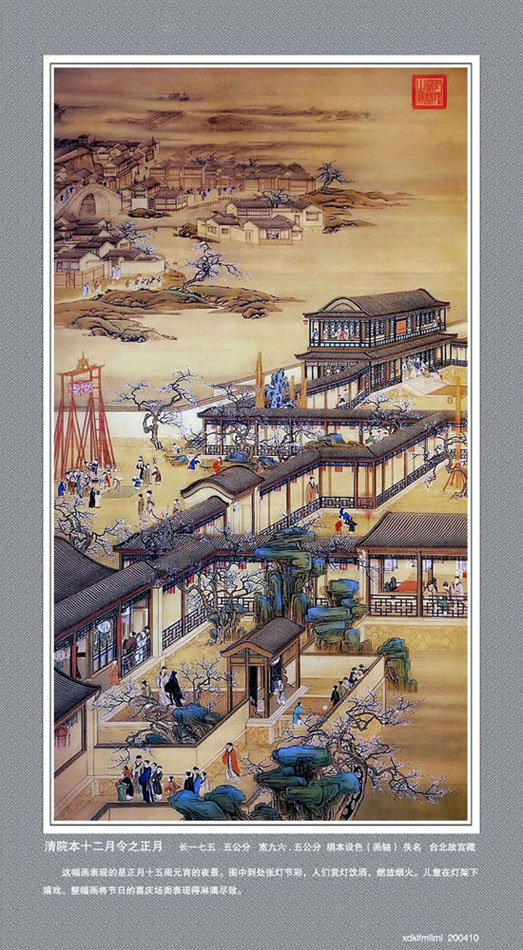
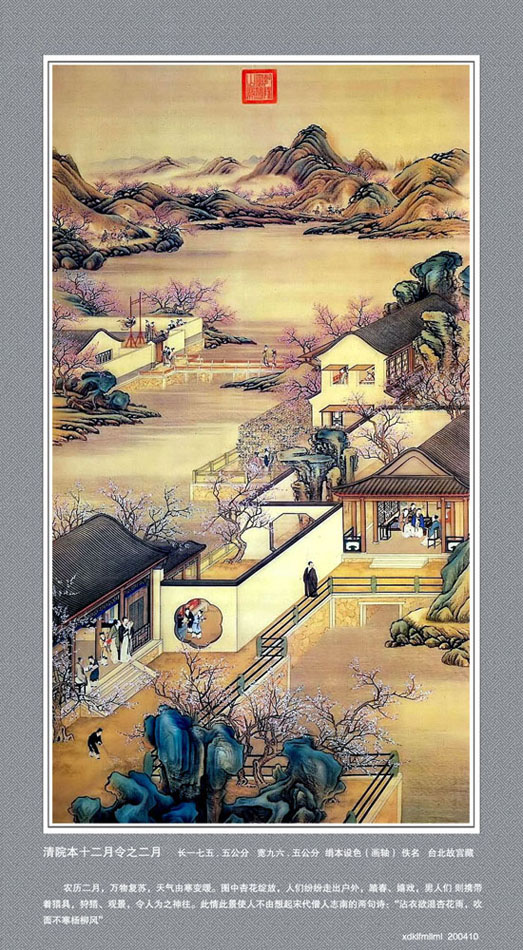
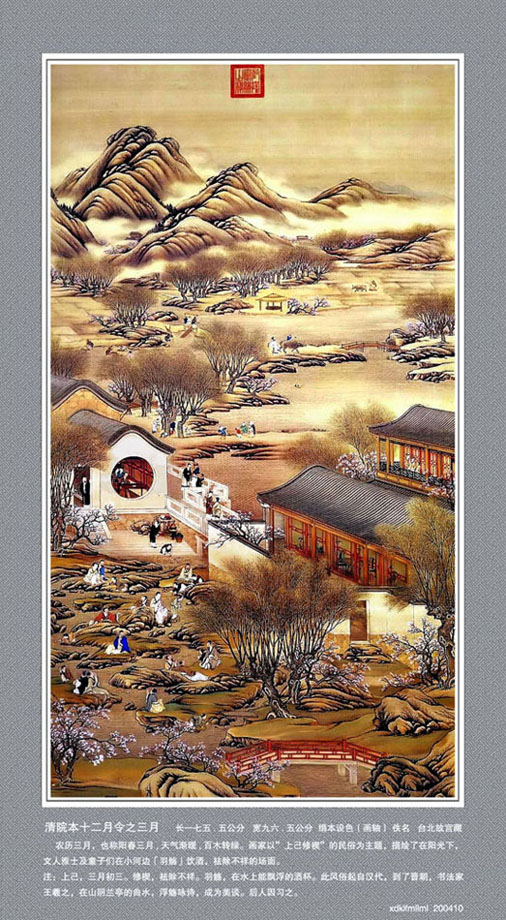
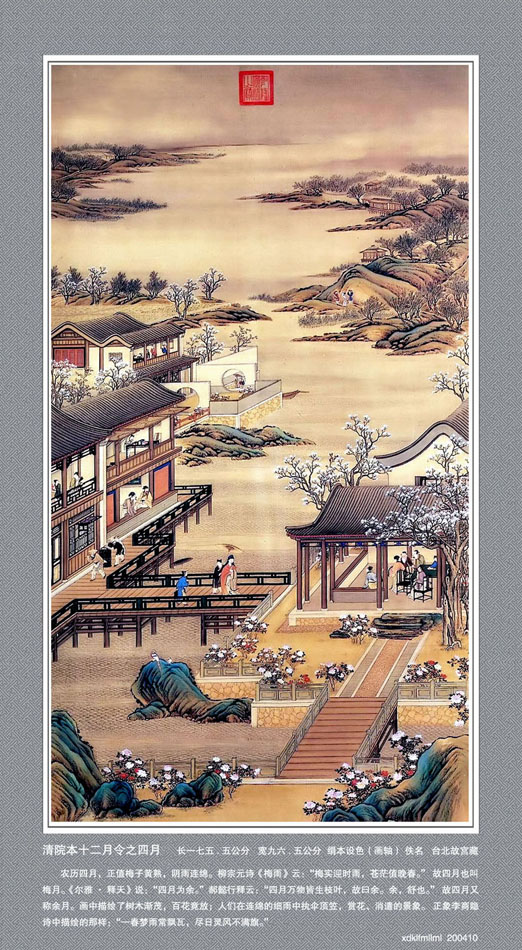
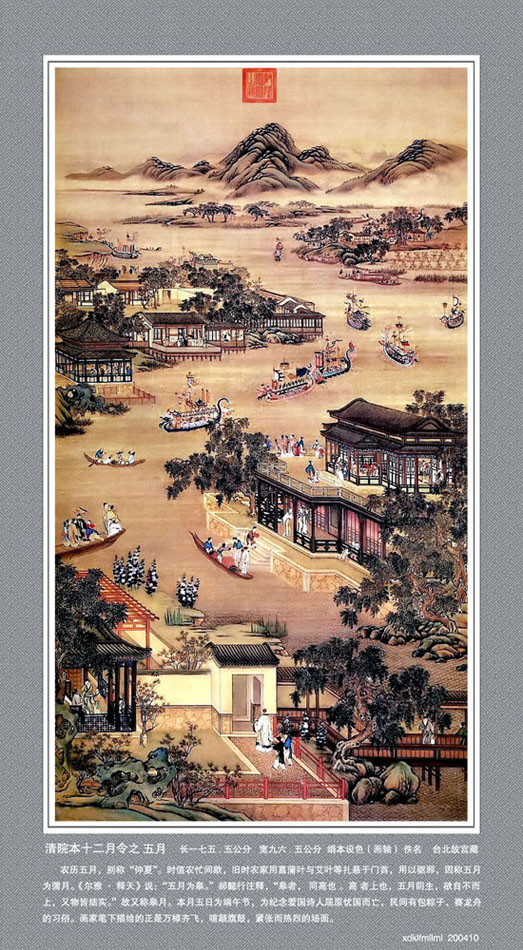
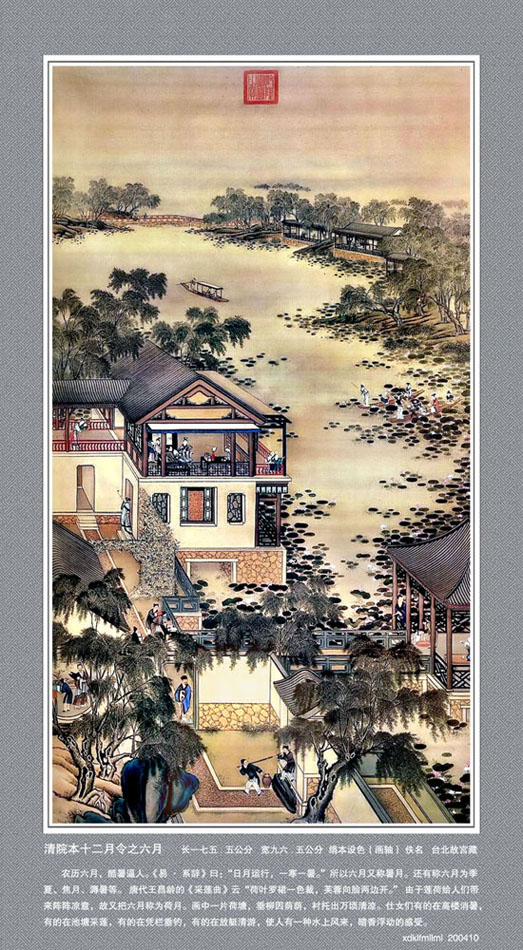
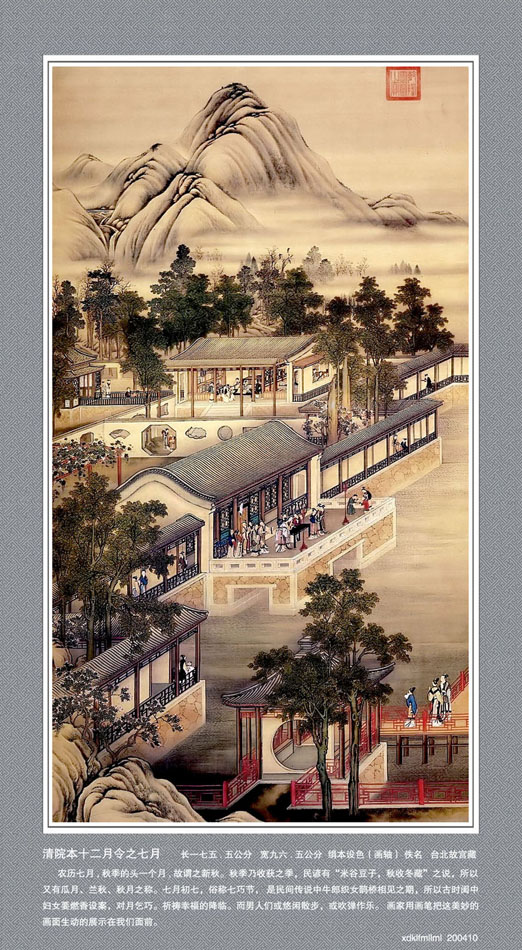
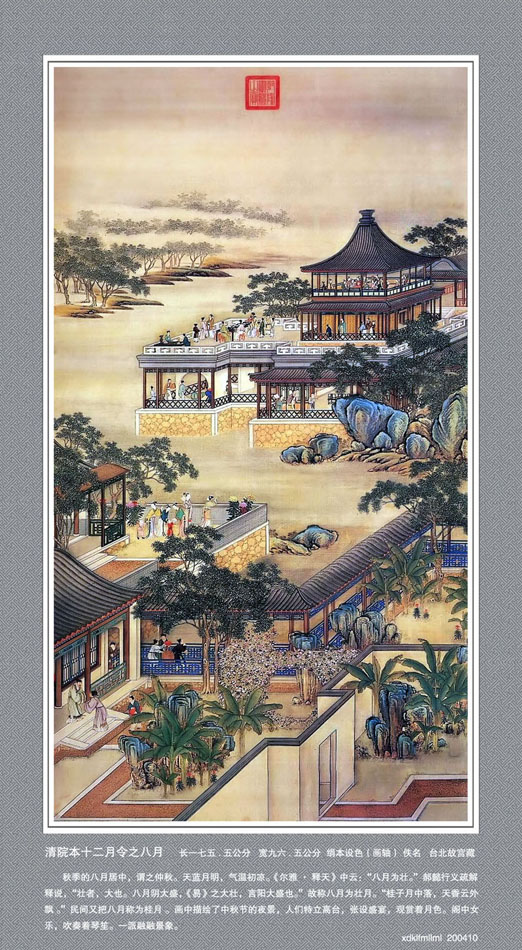
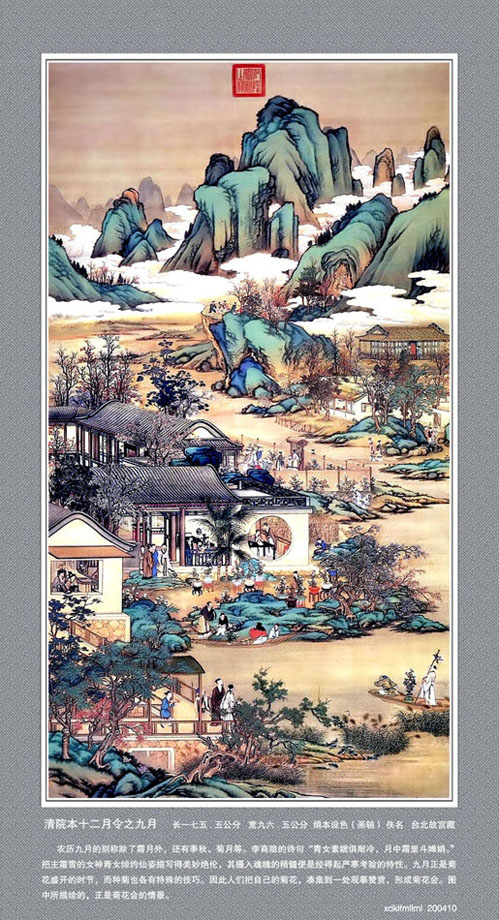
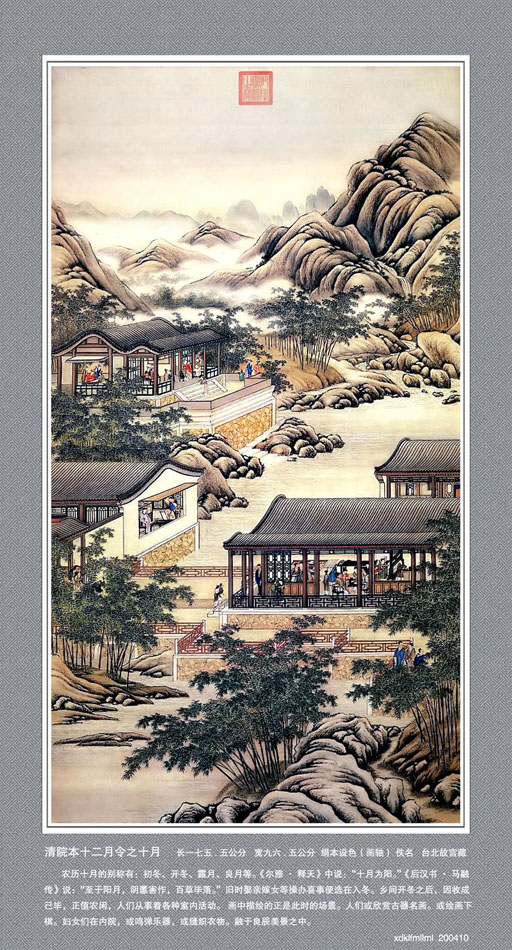
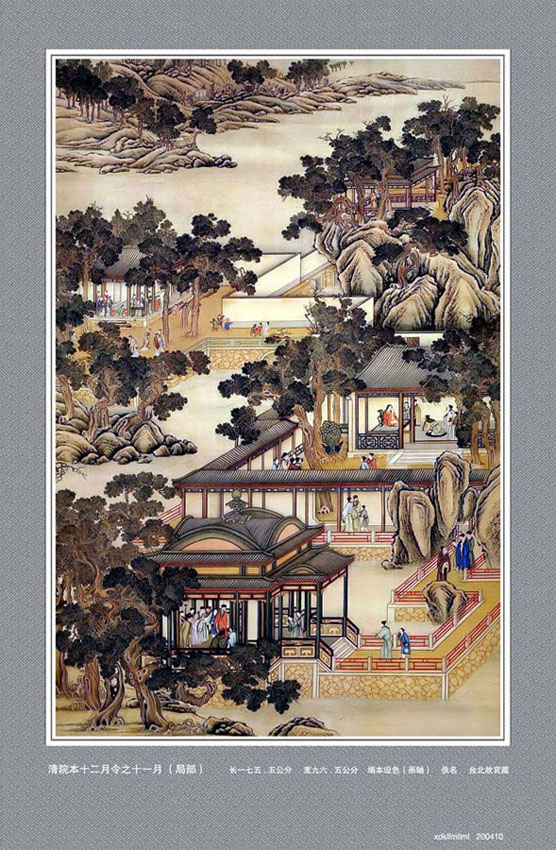
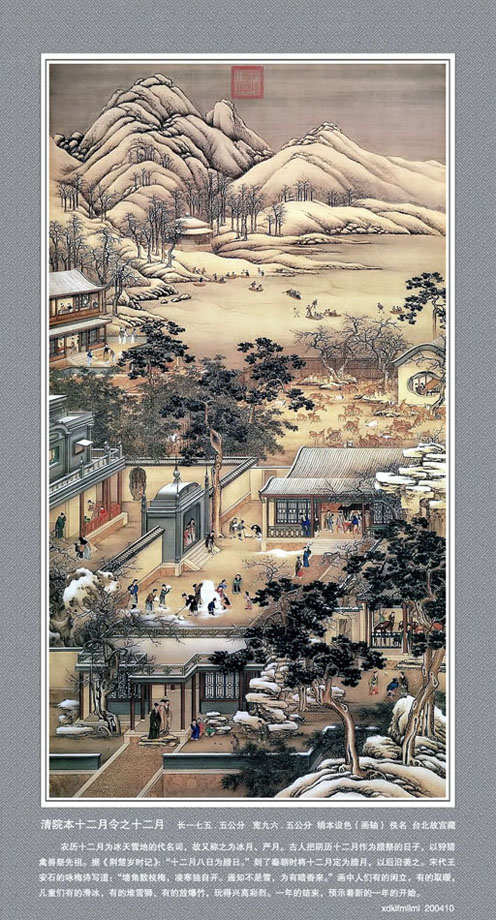
This exceptional series illustrates the genius of the Qing Academy of painting 清代画院 , blending naturalistic precision and poetic sensitivity. Each painting incorporates traditional symbolic motifs related to agricultural seasons and imperial rituals.
Masters of Qing painting and calligraphy
| Artist | Chinese name | Specialty | Major contribution |
|---|---|---|---|
| Zhu Da | 朱耷 | Lettered painting | Expressionist style with splashed ink |
| Shi Tao | 石涛 | Landscapes | Theory of "One brushstroke" 一画论 |
| Jin Nong | 金农 | Calligraphy | Invention of the "lacquer" script 漆书 |
| Ren Yi | 任颐 | Portraits | Synthesis of Chinese and Western techniques |
| Zheng Xie | 郑燮 | Bamboos | Revolutionary "disorderly" calligraphy |
| Wang Yuanqi | 王原祁 | Landscapes | Last master of the orthodox school |
| Luo Pin | 罗聘 | Fantastical figures | Ghosts series 鬼趣图 |
These masters developed the concept of 文人画 (lettered painting), where calligraphy, poetry, and seal united in a total work. Their legacy profoundly influenced modern Chinese art and continues to inspire contemporary artists.
The cultural legacy of the Qing Dynasty
The artistic production of the Qing bears witness to an exceptional period of synthesis where:
- The Ming traditions were reinterpreted with new vitality
- Cultural exchanges with the West introduced technical innovations
- The art market emerged as an independent economic force
- Aesthetic theorization reached unprecedented sophistication
The fall of the Qing in 1912 did not mean the disappearance of its artistic traditions. On the contrary, the experiments of the "eccentrics" and the erudition of the academicians laid the foundations for modern Chinese art, making this period one of the golden ages of creation in China.


