The advent of modern Chinese art (1911-1949)
The revolution of 1911 marks a decisive turning point in Chinese cultural history. The fall of the imperial system and the establishment of the Republic of China create an unprecedented societal upheaval. During this period of great turmoil - marked by warlords, Japanese invasion, and civil war - artists develop new expressions that synthesize:
- The heritage of classical techniques (ink and wash)
- Western influences (realism, impressionism)
- The quest for a modern national identity
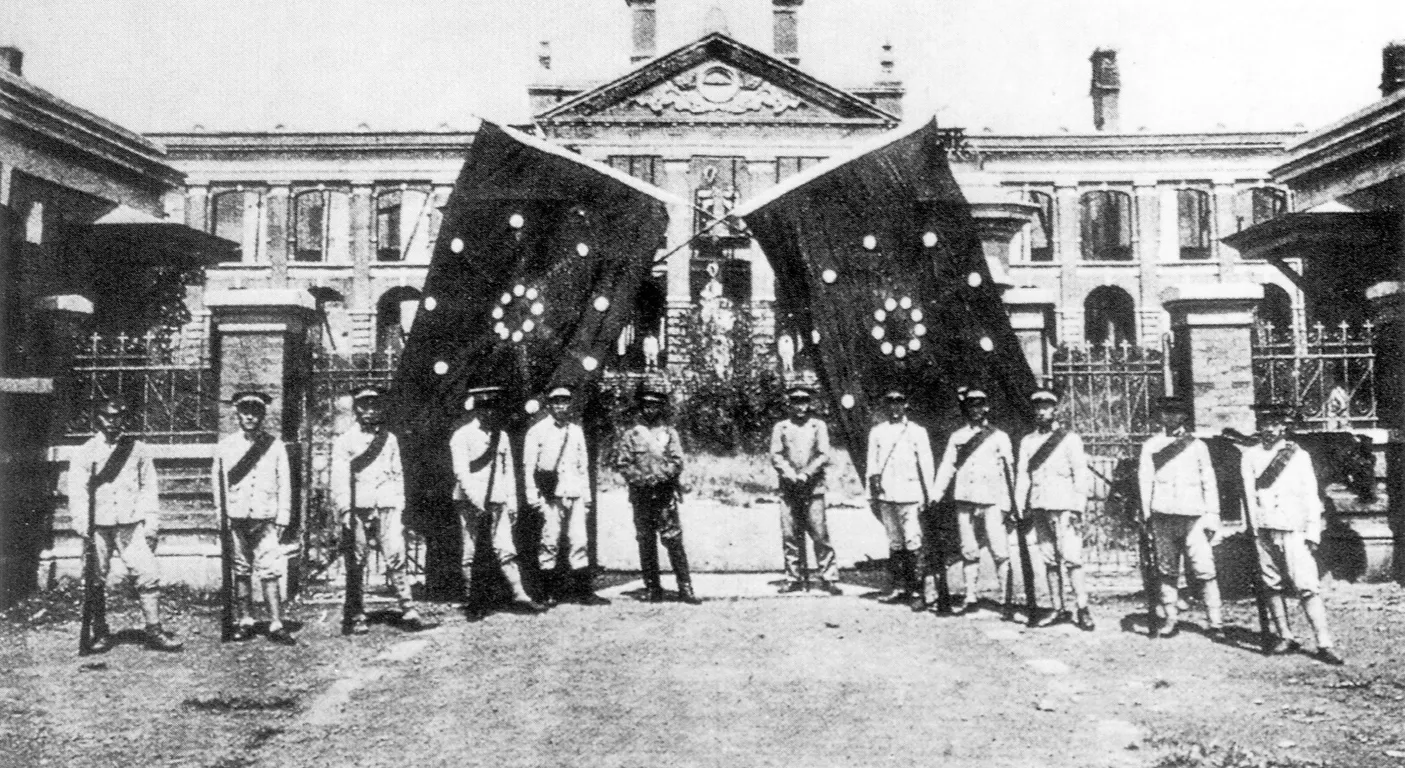
Historical context: between chaos and rebirth
The period 1911-1949 constitutes an era of extreme contradictions:
| Event | Cultural impact |
|---|---|
| May Fourth Movement of 1919 | Rejection of Confucian traditions, call for modernization |
| War against Japan (1937-1945) | Engaged art and patriotic propaganda |
| Proclamation of the PRC in 1949 | Institutionalization of art at the service of the state |
Major aesthetic revolutions
The modern artist must be the eye that sees and the hand that testifies - 徐悲鸿
Three major currents redefine the artistic landscape:
- Engaged realism: Denunciation of popular suffering
- East-West synthesis: Hybridization of techniques
- Neo-traditionalism: Reinterpretation of the classics
Masters of Chinese modernism

徐悲鸿 (1895-1953)
Pioneer of academic realism. Trained in Paris, he revolutionized art education by integrating Western anatomy. Major works: 愚公移山 () and his famous horses.

齐白石 (1864-1957)
Master of 写意 (, freehand painting). His creatures (shrimps, insects) combine precision and poetic vitality. Artist favored by Mao.
Other major figures
- 黄宾虹 (1865-1955): Revolutionary of black ink, theorist of the "inner light" Landscapes
- 吕寿琨 (1919-1975): Pioneer of ink abstraction, synthesis of Zen and modernity Avant-garde
- 李可染 (1907-1989): Master of light and contrast, reinvented heir Innovation
1949: Art at the service of the new China
The proclamation of the People's Republic leads to a political instrumentalization of art:
Doctrine of socialist realism
Artists must now:
- Praise revolutionary virtues
- Represent the proletarian ideal
- Use styles accessible to the masses
This period sees the birth of the visual icons of Maoism, such as 毛主席去安源 (), a collective work of 1967.
Heritage and legacy
Despite political constraints, technical innovations endure:
- Calligraphy evolves towards more personal expressions
- Ink techniques resist the imposition of oil painting
- The concept of 气韵生动 (, rhythmic spirit) remains central
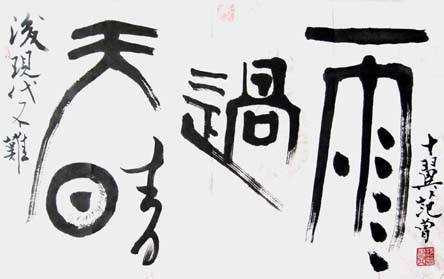 After the rain, clear skies (2004)
Work by Fan Zeng 范曾


